saved
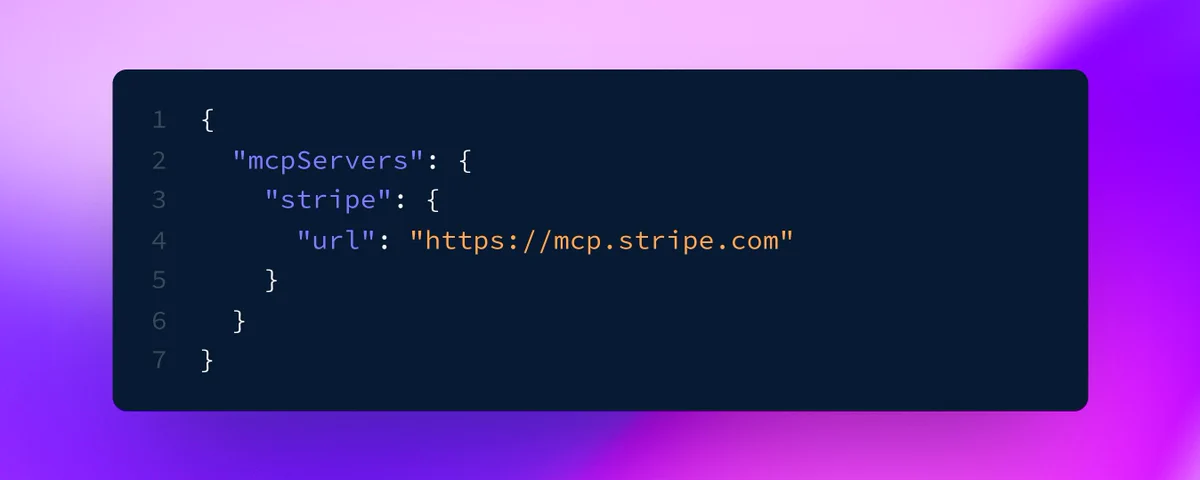
Reimagining seven lines of code for the AI era
Hraness cites a source capture. The source author remains the source.
soft-bread engineer @stripe 🍞; public transit enthusiast 🚃
Reimagining seven lines of code for the AI era
I joined Stripe over a decade ago because I wanted to work on developer tools. I loved the idea of building infrastructure that let builders much more creative than me build products, and business models, that I could not even conceive of.
Software looked very different then. Executing a great idea was still gated on humans reading docs and writing software line by line, with a lot of copy and paste along the way. So we obsessed over the details. We spent our time agonizing over what the best defaults are, what the most intuitive property names are, and how to cram the most power into the fewest lines of code.
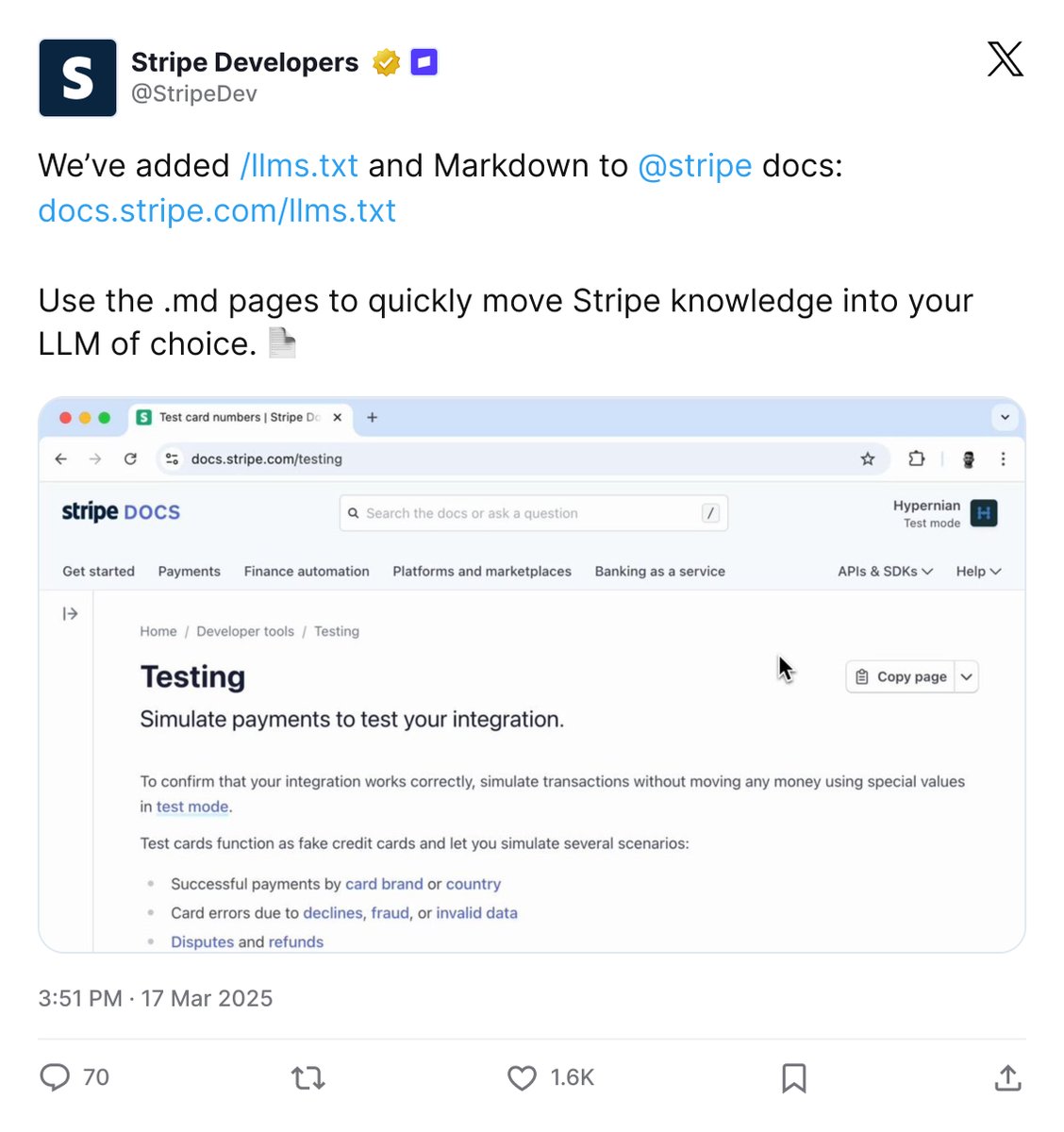
LLM traffic to Stripe documentation was up 10x in 2025. We went from adding a “summarize” button for humans to optimizing the docs themselves to be consumed by models. And beyond the docs, you can feel the shift everywhere: developers writing less code by hand, and non-technical builders describing products in plain language and watching working software suddenly appear without ever looking under the hood at the code.
These changes to the internet economy give me a renewed sense of energy.
“Developer experience” has evolved. Honestly, what does being a developer even mean today? The problem feels unsolved, especially at a multi-product company like Stripe. Keeping Stripe powerful while making it feel simple, across changing modes of use, is now the core challenge of creating an excellent developer experience.
What is the equivalent of “seven lines of code to create a payment” in this new era, when there are both more capabilities available and more ways to access them? How do we make sure that as Stripe grows in breadth and complexity, every interaction still feels coherent, intuitive, and trustworthy, whether it comes from a developer writing code, a founder describing a product in plain language, or an agent acting on behalf of a business?
It is exciting to be agonizing over a new set of problems again. Here’s a sampling of how we approached these problems over the past year:
- The cost of underlying models changes frequently. If pricing does not keep up, margins vanish. On the other hand, if prices fall and products do not adjust, they lose competitiveness. Until recently, most developers tracked and implemented these shifts manually. Now, Stripe tracks token usage, applies markups, and updates pricing automatically, which allows AI companies like Lovable, Chipp, and Mesa to monetize efficiently. We’ve also partnered with providers like OpenRouter, Cloudflare, and Helicone so developers can route model requests through their existing compute stacks while Stripe logs usage and applies pricing automatically.
- To make launching monetization capabilities even faster and easier, platforms like Vercel, Replit, Base44, and Manus have integrated with our claimable sandboxes. This lets technical and nontechnical builders test payments, checkout, and billing flows natively without context switching. When a product is ready to launch and collect payments, the sandbox can be converted into a live Stripe account with configurations intact. Removing this setup friction makes getting to your first dollar much easier: 60% of folks coming to Stripe from these platforms are creating new Stripe accounts.
- We have also been making it easy to take actions and retrieve information on Stripe accounts from inside AI-powered tools. With Stripe Model Context Protocol (MCP), you can create invoices, set up payment links, manage subscriptions, or retrieve transaction data inside Cursor, VS Code, ChatGPT, Manus, Mistral, Groq, Claude, and Amazon’s Kiro. Stripe MCP is also enabling new internal workflows. Dust uses Stripe’s MCP to let an internal AI agent review refund requests, validate charges, apply company policy, and issue refunds.
- At the same time, we know that agents may not reach for MCP for every type of task, so we continue to make sure our docs and APIs are consumable directly by agents, safely and efficiently.
Of course, the space is changing very quickly. We've got a lot more in the works. Collectively, these Stripe updates are both making developers a lot more productive and enabling non-technical builders to build products and create businesses by themselves for the first time. It’s the same mission that brought me to Stripe twelve years ago: building surprisingly great experiences for builders. If this mission excites you, come work with us!
Photo 1. Screenshot of an X post from Stripe Developers (@StripeDev), yellow business check and Stripe S badge, navy avatar with white S. Post text: "We've added /llms.txt and Markdown to @stripe docs: docs.stripe.com/llms.txt" then "Use the .md pages to quickly move Stripe knowledge into your LLM of choice." Embedded browser screenshot of docs.stripe.com/testing: page title Testing, subheading Simulate payments to test your integration, body on test mode for successful payments by card brand or country, card errors from declines fraud or invalid data, disputes and refunds; top-right Copy page button with dropdown. Tab title Test card numbers | Stripe Do... Timestamp 3:51 PM · 17 Mar 2025; about 70 replies and 1.6K likes visible.
Cover / card image. Dark-themed code block on purple-to-light-blue gradient, line numbers 1–7, JSON: { "mcpServers": { "stripe": { "url": "https://mcp.stripe.com" } } }. Keys in light blue; string value https://mcp.stripe.com in orange.