hraness
← sponge

scrolling presentation · annotated

Sponge: curiosity into durable knowledge

A scrolling presentation and annotated reading of Sponge’s human-steered, evidence-bearing approach to generative knowledge.

01 · premise

Curiosity into durable knowledge

Sponge turns a human question into an evidence-bearing, reviewable, reproducible edition.

open full-size diagramopen full-size diagram

The object

Sponge is not a chatbot that generates encyclopedia pages. It is a research workspace and knowledge substrate that preserves the path from a human question to an evidence-bearing, reviewable, reproducible edition.

The compact loop is the whole wager: people decide what is worth knowing; agents widen and deepen the search; evidence and review determine what can endure; each synthesis exposes the next useful question. The public Sponge overview and the earlier vision prompt describe the same ambition at different resolutions.

Read alongside: Co-STORM on collaborative, question-led knowledge curation and W3C PROV-O on representing provenance.

02 · problem

The answer is not the artifact

A fluent paragraph hides the distinctions required to know whether an answer should be trusted.

  • A source is not a claim.
  • A citation is not entailment.
  • A synthesis is not an authority decision.
  • Fluency is not reproducibility.

The missing structure

A fluent answer compresses source, claim, context, disagreement, confidence, and authority into one surface. That is convenient for reading and inadequate for deciding whether the result deserves trust. Sponge keeps those distinctions available behind the prose.

The research literature has begun to measure the same failure at finer granularity. FActScore decomposes generations into atomic facts; Microsoft Research’s Claimify focuses on extracting verifiable claims; OpenAI’s account of why language models hallucinate explains how common evaluation incentives can reward guessing.

Sponge’s response is architectural: preserve enough structure that uncertainty and disagreement do not have to be reconstructed from a polished paragraph after the fact.

03 · organizing principle

Curiosity shapes the graph

Knowledge grows where people ask questions; every synthesis can open a better inquiry.

open full-size diagramopen full-size diagram

Demand-shaped knowledge

Most ingestion systems start with a corpus and ask what can be extracted from it. Sponge starts with curiosity and asks which evidence could change the answer. That makes inquiry an organizing object, not merely a prompt that disappears after generation.

The loop is recursive: curiosity becomes an inquiry; agents gather evidence and propose statements; people review the proposed assertions; synthesis reveals both an edition and new uncertainty. Co-STORM similarly treats conversation and perspective discovery as part of knowledge curation, while Google DeepMind’s AI co-scientist frames multi-agent work around hypothesis generation, critique, and refinement.

The consequence is a graph shaped by what people care to understand rather than a warehouse that grows without an epistemic purpose.

04 · ontology

A small kernel for plural knowledge

Seven concepts preserve epistemic structure without imposing one universal domain taxonomy.

open full-size diagramopen full-size diagram

Seven composable concepts

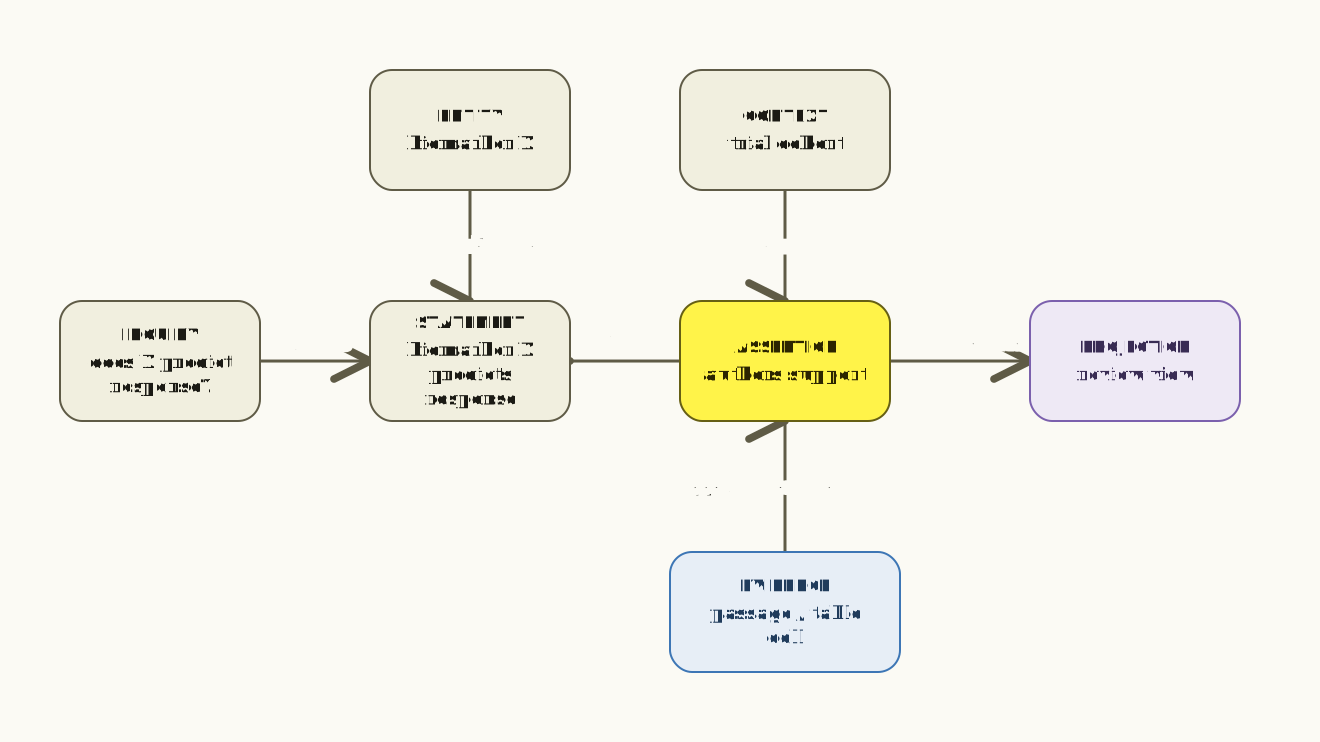
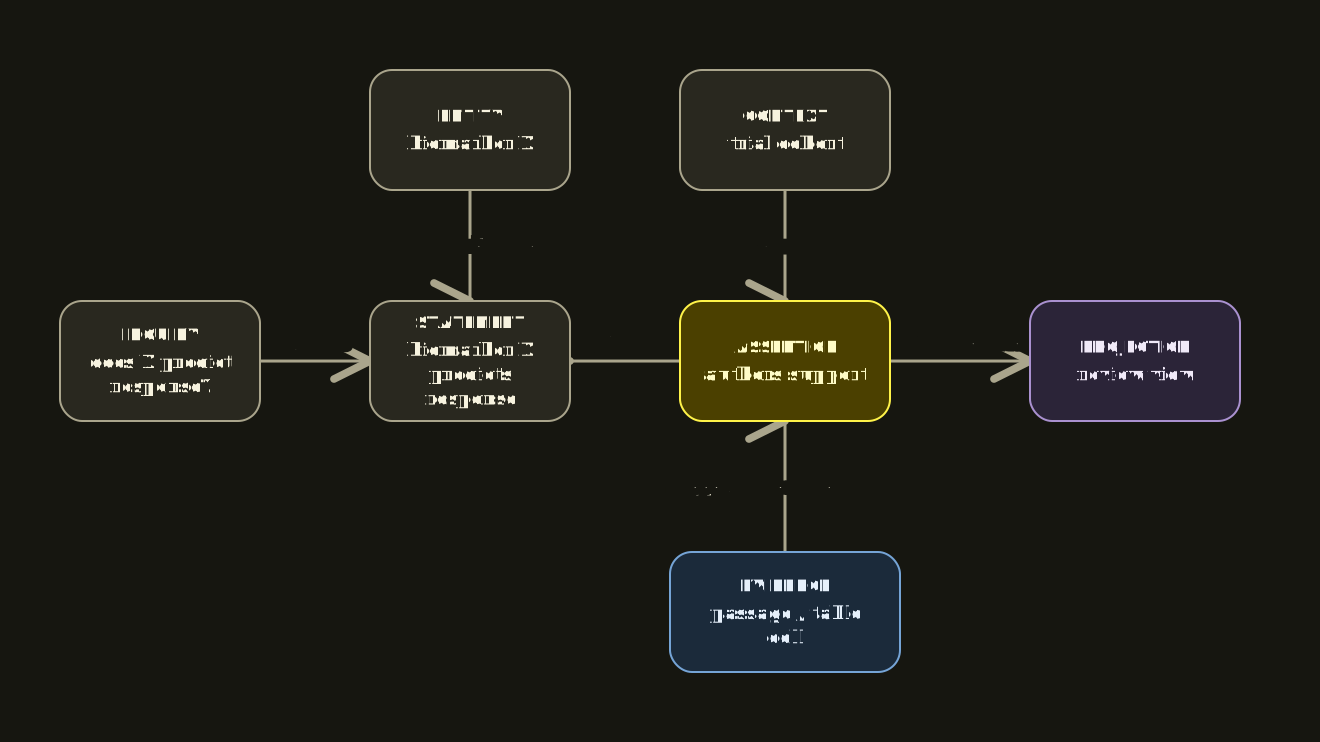
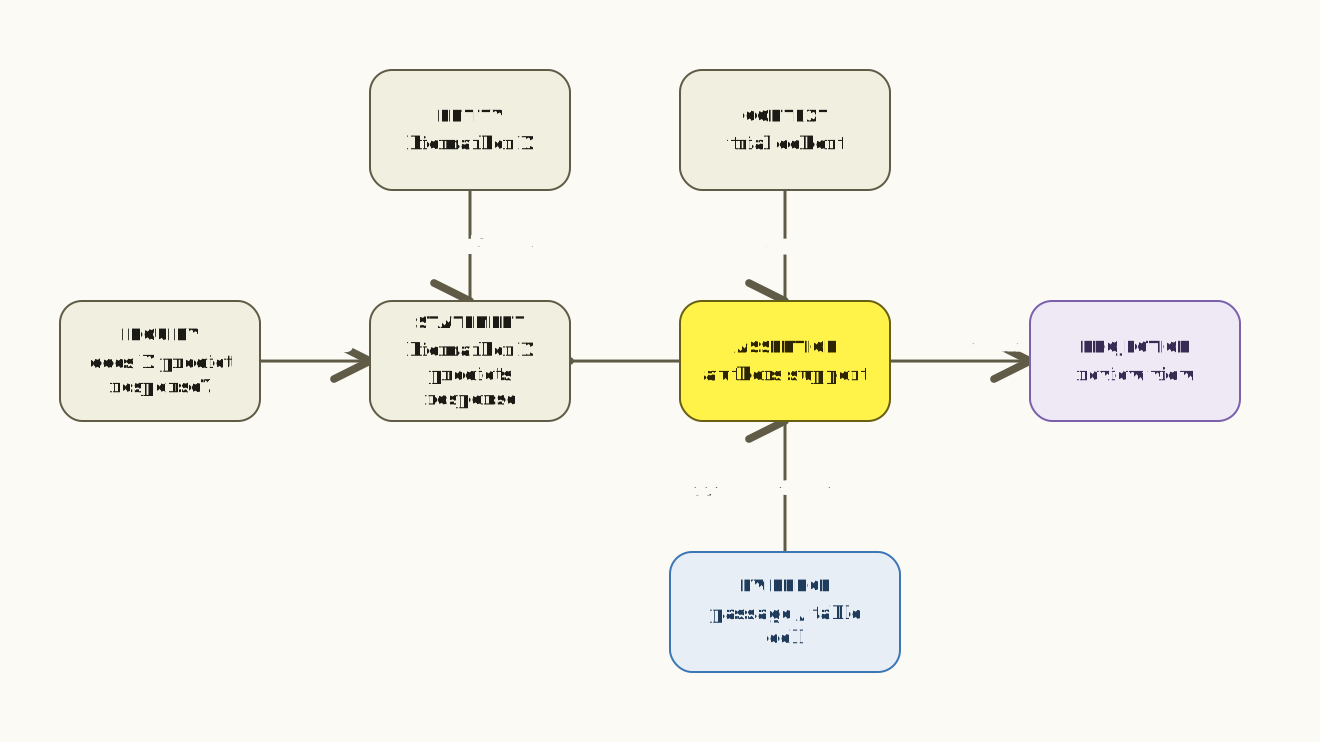
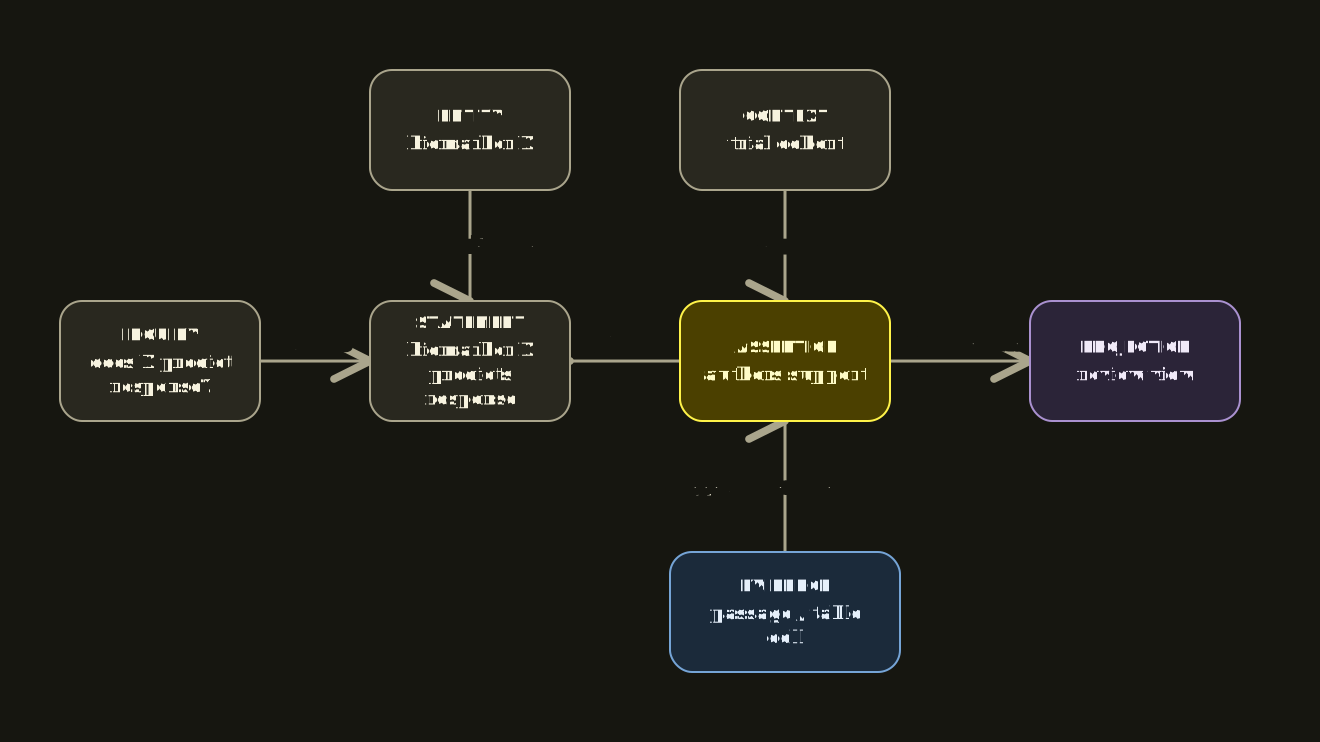
The current Sponge ontology uses a deliberately small kernel: Entity, Statement, Assertion, Evidence, Context, Inquiry, and Projection. A statement is an immutable proposition with a subject, predicate, object, and explicit qualifiers. An assertion is an attributable stance toward that statement in a context, with provenance and review state. Evidence bears on an assertion. Context qualifies it. A projection selects a view without pretending that the view is the whole graph.

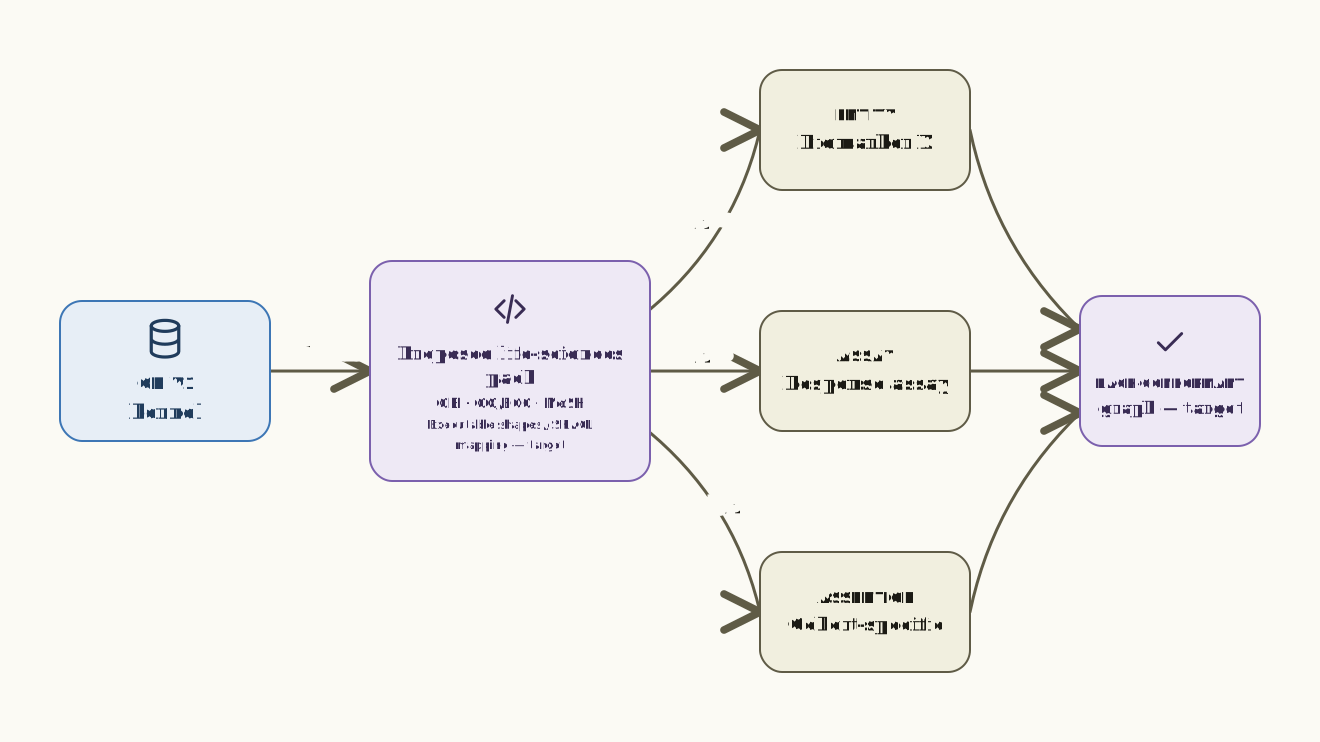
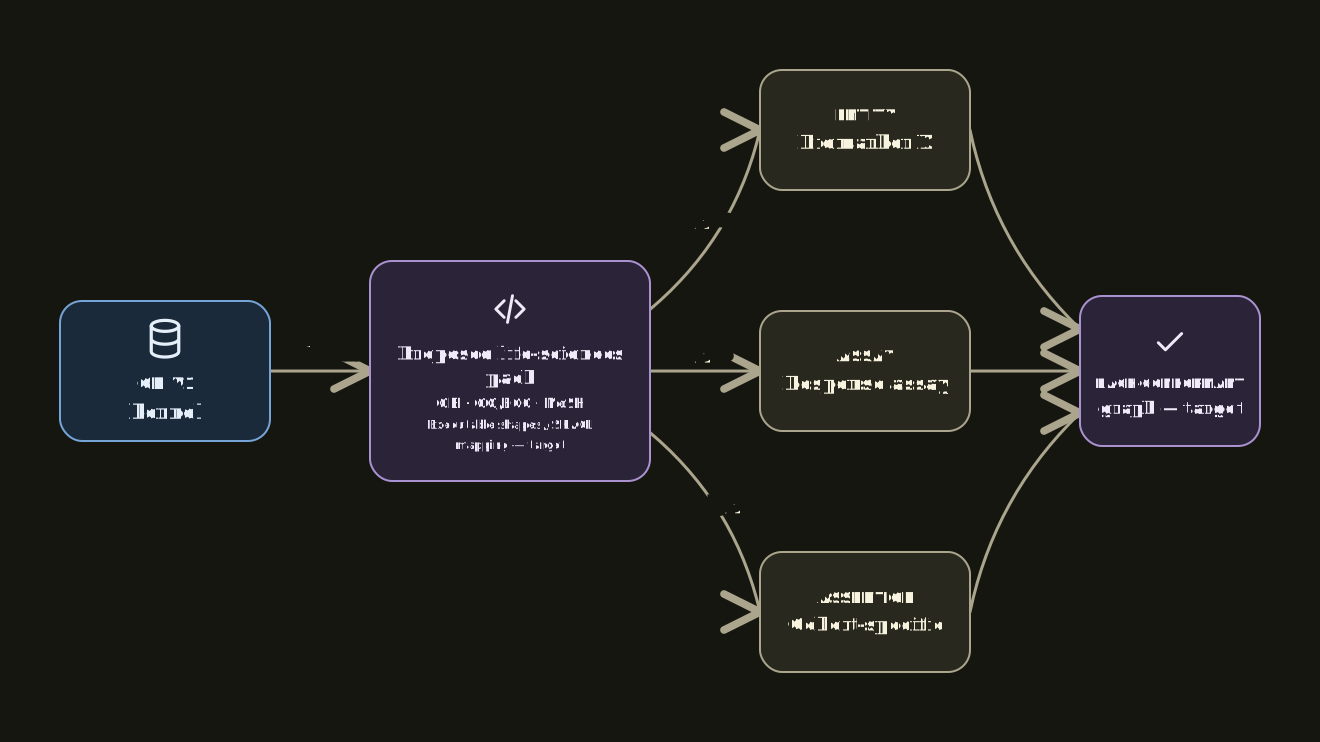
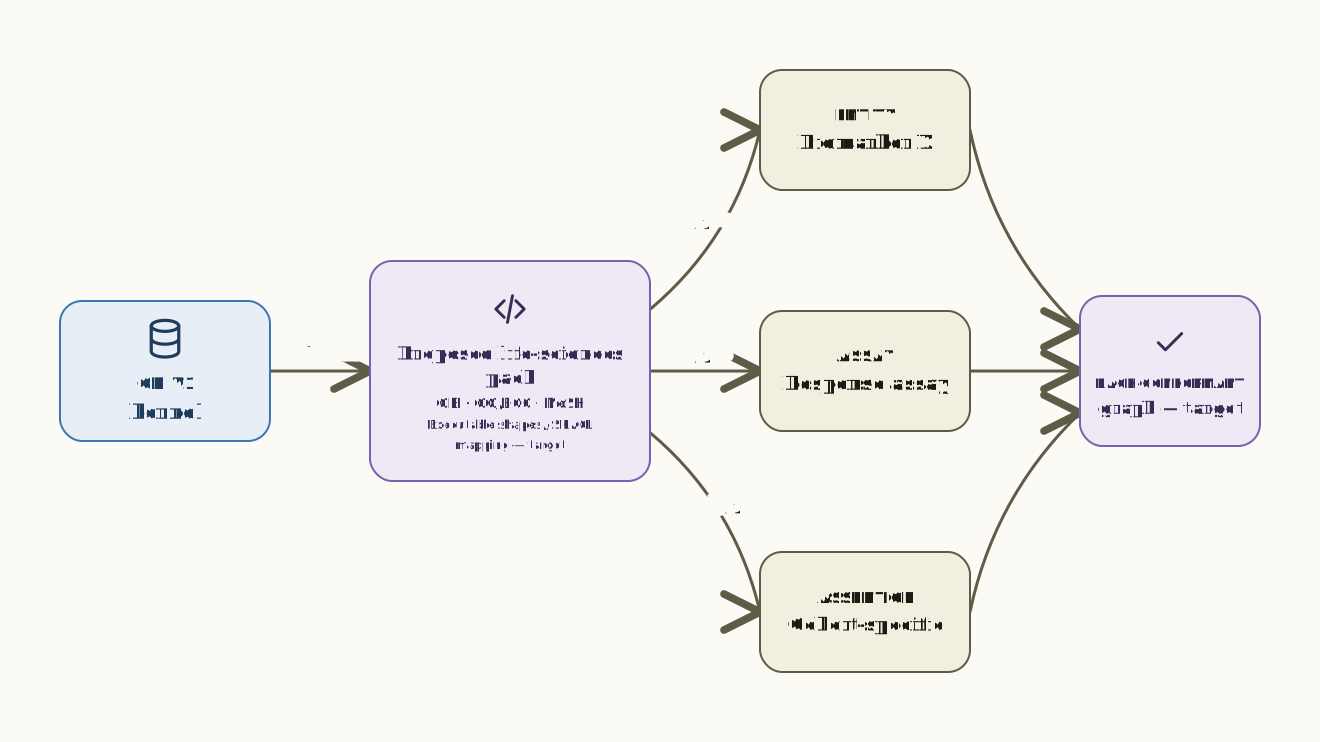
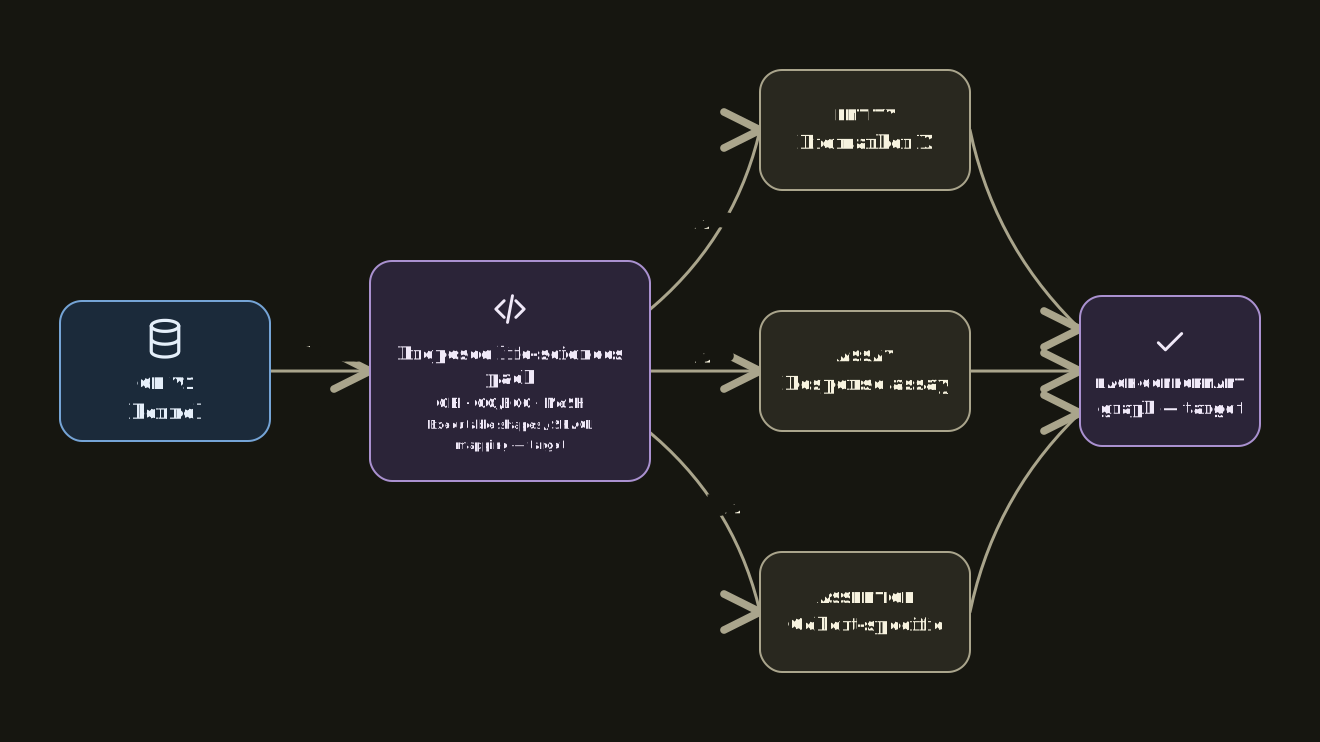
This resembles the design pressure behind W3C PROV-O and micropublications: make provenance and argument structure representable without forcing every domain into one vocabulary. Versioned domain Shapes can extend the kernel for clinical imaging, molecular data, law, history, or another field.

Smallness is a constraint, not a claim of completeness. The kernel should remain stable enough to compose while domain-specific schemas carry the precision the kernel should not own.

05 · governance

AI proposes; people decide

Agents do substantial research labor; people retain epistemic and publication authority.

open full-size diagramopen full-size diagram

Authority is a transition

Agents may search, extract, compare, challenge, and draft. They may propose new statements and assertions. They do not silently accept their own work, expand their own rights, merge identities, or publish an edition.

Human review creates a distinct transition from proposal to accepted assertion. Publication is another transition, with another explicit decision. This separation follows the governance instinct in the NIST AI Risk Management Framework: responsibilities and controls should remain legible across the lifecycle.

The rule is intentionally stronger than “human in the loop.” The human is not decorative supervision around an otherwise autonomous result; the human owns the acts that create epistemic and publication authority.

06 · execution

Research is a verifiable process

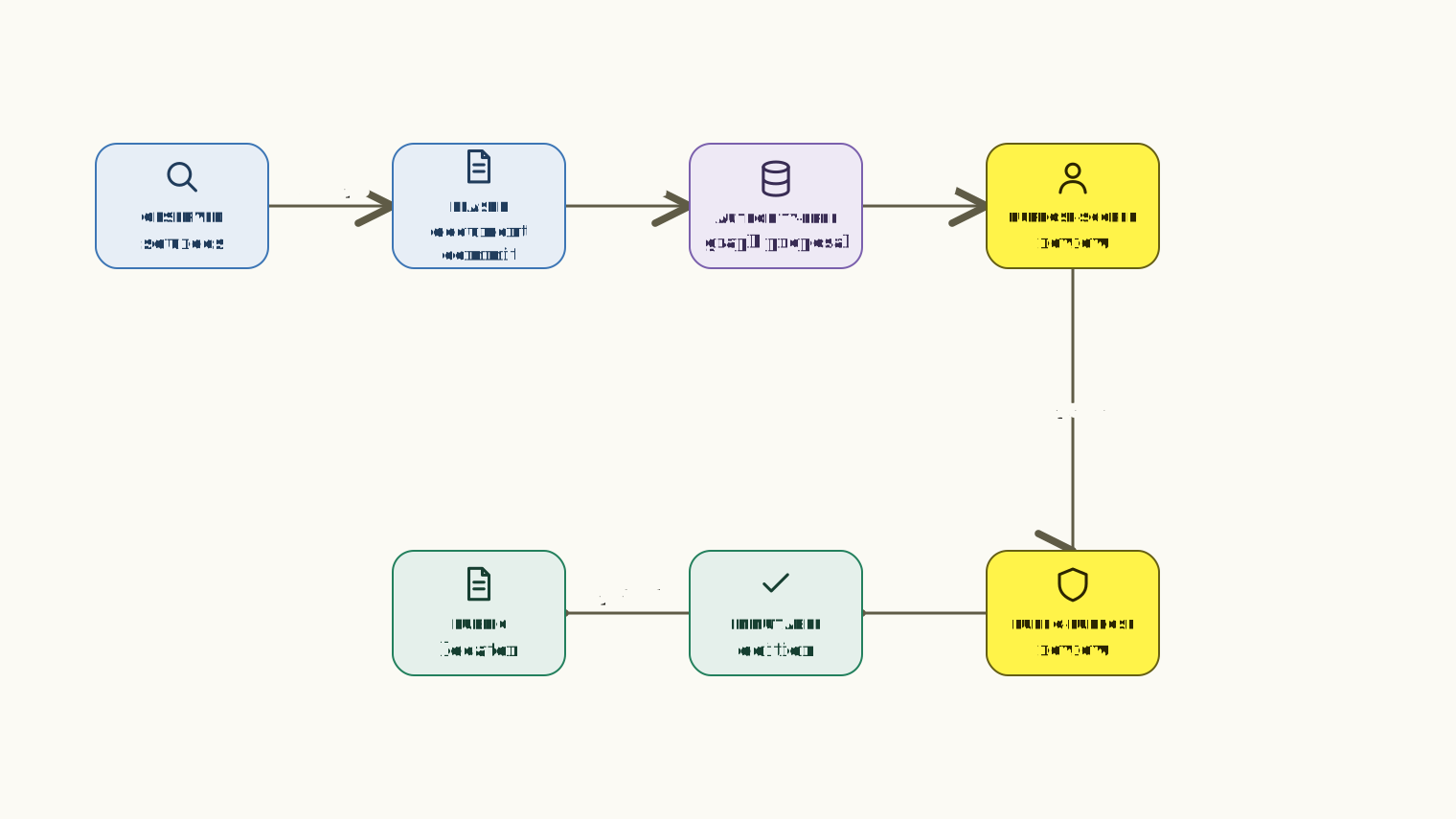
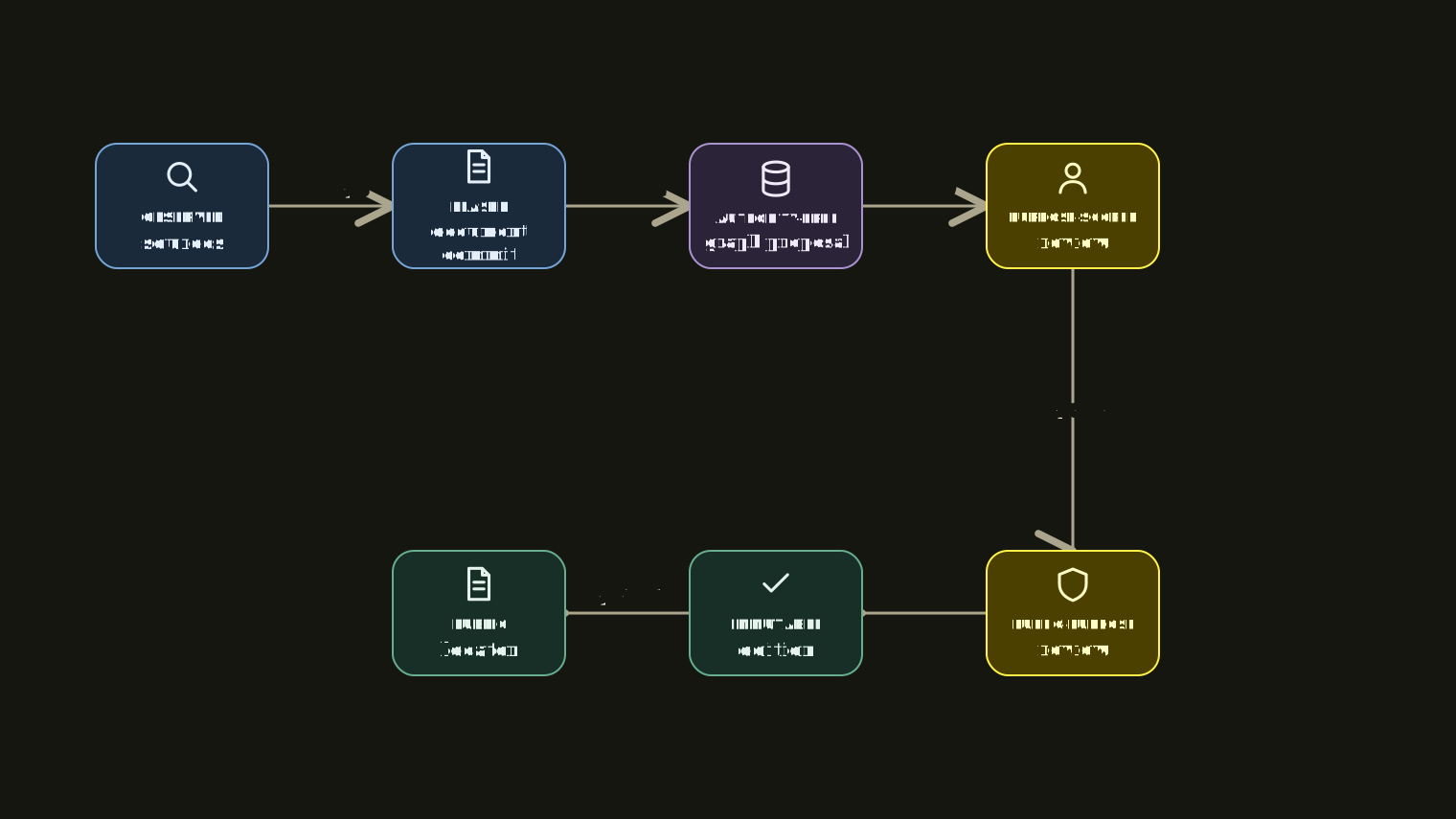
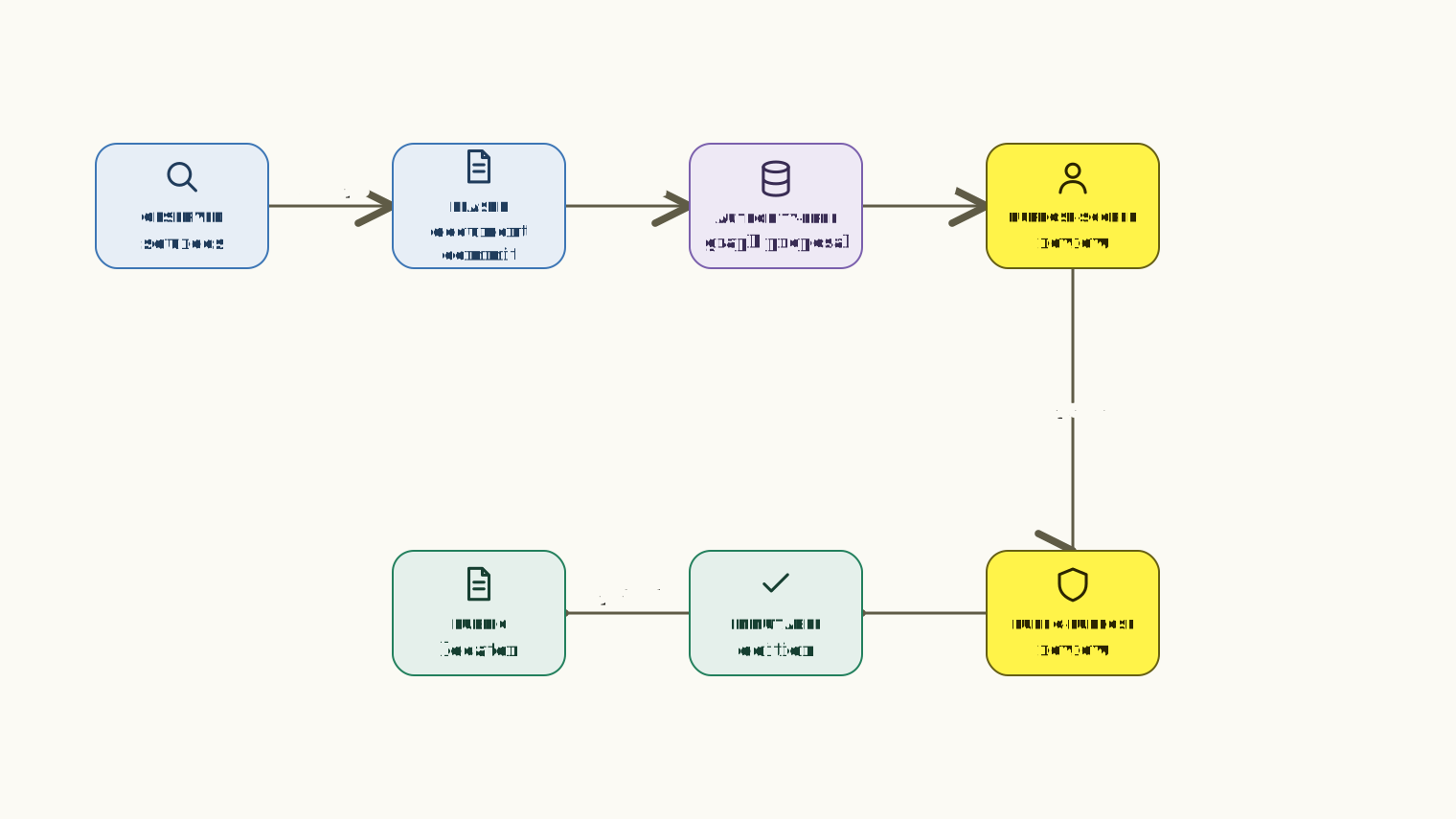
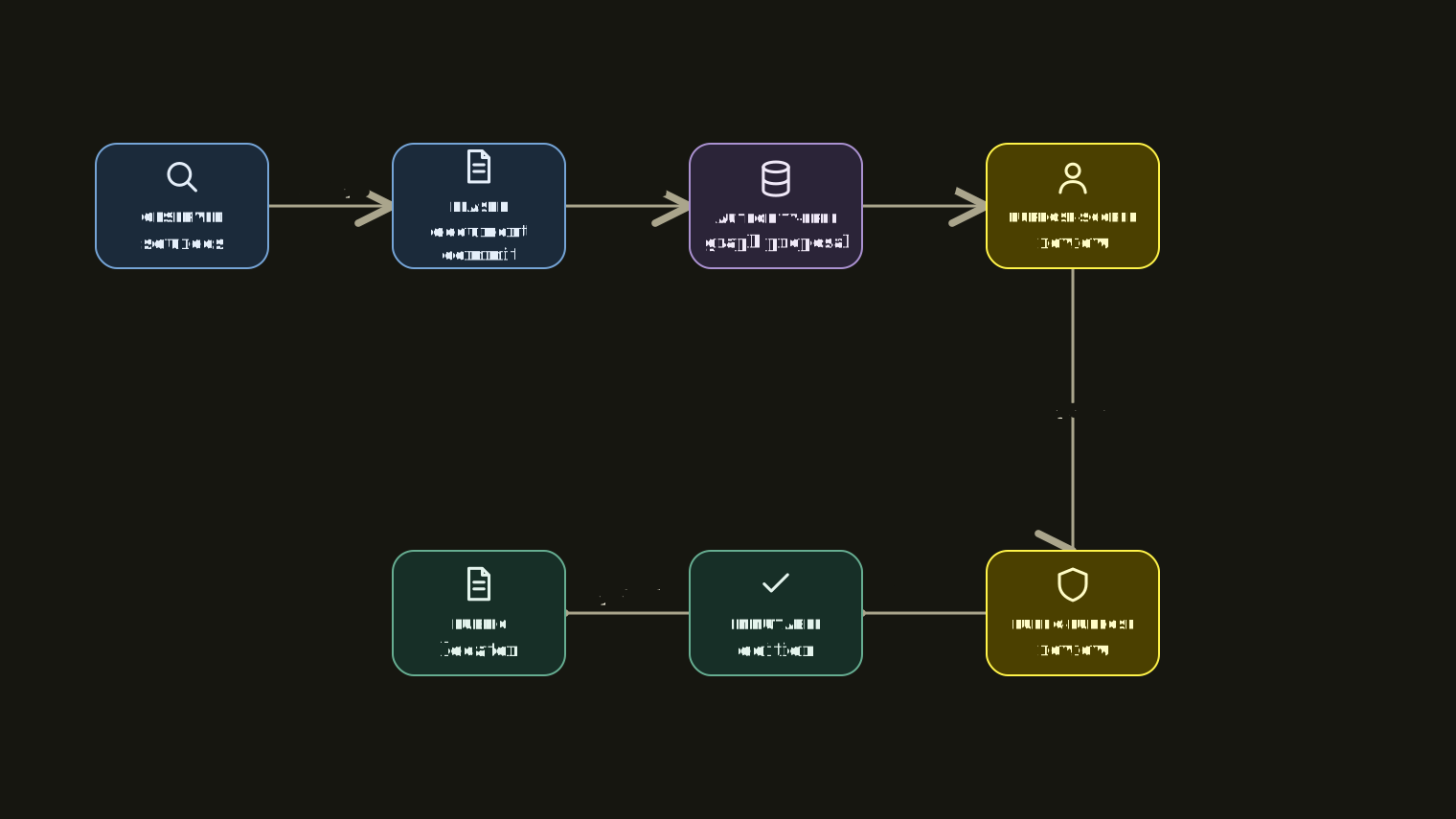
The research path records how evidence was found, covered, synthesized, and committed.

open full-size diagramopen full-size diagram

Receipts, not recollection

The implemented research path separates planning, guarded retrieval, an observed-source registry, coverage accounting, source-bound findings, a tool-free writer, and an atomic document commit. Each boundary produces receipts that make a failure localizable instead of asking a final model to narrate what it remembers doing.

Anthropic’s account of its multi-agent research system describes the value—and coordination cost—of parallel research agents. Microsoft Research’s VeriTrail and Google Research’s Science One chain-of-evidence framework push toward verifiable multi-step workflows.

Sponge’s position is that provenance belongs in the execution model and the committed artifact, not in a confidence paragraph appended after synthesis.

07 · workspace

The document is the workbench

A living document gives human and agent work stable, attributable, reversible places to happen.

open full-size diagramopen full-size diagram

Stable places to think

Research happens beside a living document. Stable blocks carry text, citations, links, outline position, and history. A research agent works through a fenced block lease, so its permitted write surface is explicit and its changes remain attributable and reversible.

This is also a context-engineering choice. Anthropic describes context engineering for agents as constructing the smallest high-signal state for the next step. A document with stable blocks, citations, and scoped leases gives agents structured working context without turning an entire session transcript into the product.

Publication freezes an immutable checkpoint. Later work can continue privately without rewriting the public edition that a reader or downstream agent already saw. The public Sponge docs describe the user-facing workspace and its document model.

08 · publication

A page is a reproducible projection

A generative page is a pinned projection over knowledge, not a one-off completion.

  • A ViewSpec selects question, audience, time, language, and policy.
  • An edition pins the graph revision, assertions, evidence, conflicts, and receipts.
  • Many views can share one evidence graph.
  • Selecting one view does not erase alternatives.

Exact views over shared knowledge

A generative encyclopedia page should not be ephemeral prose whose sources and model state disappear. In Sponge, a projection is an exact view over a specific graph state. The edition records what was selected and which revision produced it.

This makes reproducibility a property of the artifact. Trusty URIs demonstrate how content-addressed identifiers can make digital knowledge artifacts verifiable. Microsoft GraphRAG shows why graph-shaped evidence can support questions that flat retrieval misses; Sponge adds the authority and publication distinctions required to make a selected view durable.

The same evidence can support a concise public explanation, a specialist review, or a dated policy view without declaring any one rendering to be the graph itself.

09 · interfaces

One substrate, two ways in

People and external agents use different interfaces but act on the same governed substrate.

  • Human workspace: compose, inspect, revise, and review.
  • Agent interface: exact read, plan, command, and verify.
  • Credentials remain scoped and revocable.
  • Requesting publication never grants publication authority.

Different interfaces, one object model

People work in a visual workspace. External agents work through an API, CLI, and installable skill. Both converge on the same inquiries, documents, proposals, reviews, and editions rather than maintaining a “human version” and an “automation version” that drift.

The Sponge developer guide presents the programmatic surface. Its read-plan-command loop is deliberately narrower than unrestricted remote control: an agent reads exact state, proposes a bounded command, and verifies the resulting state. Credentials can be scoped and revoked.

This is the operational expression of the authority model. Access to research tools can be delegated; publication authority is never inferred from the ability to call them.

10 · clinical stress test

TRACE + AUTHORITY

Clinical research tests whether provenance and responsible decision boundaries survive multimodal complexity.

open full-size diagramopen full-size diagram

A demanding test case

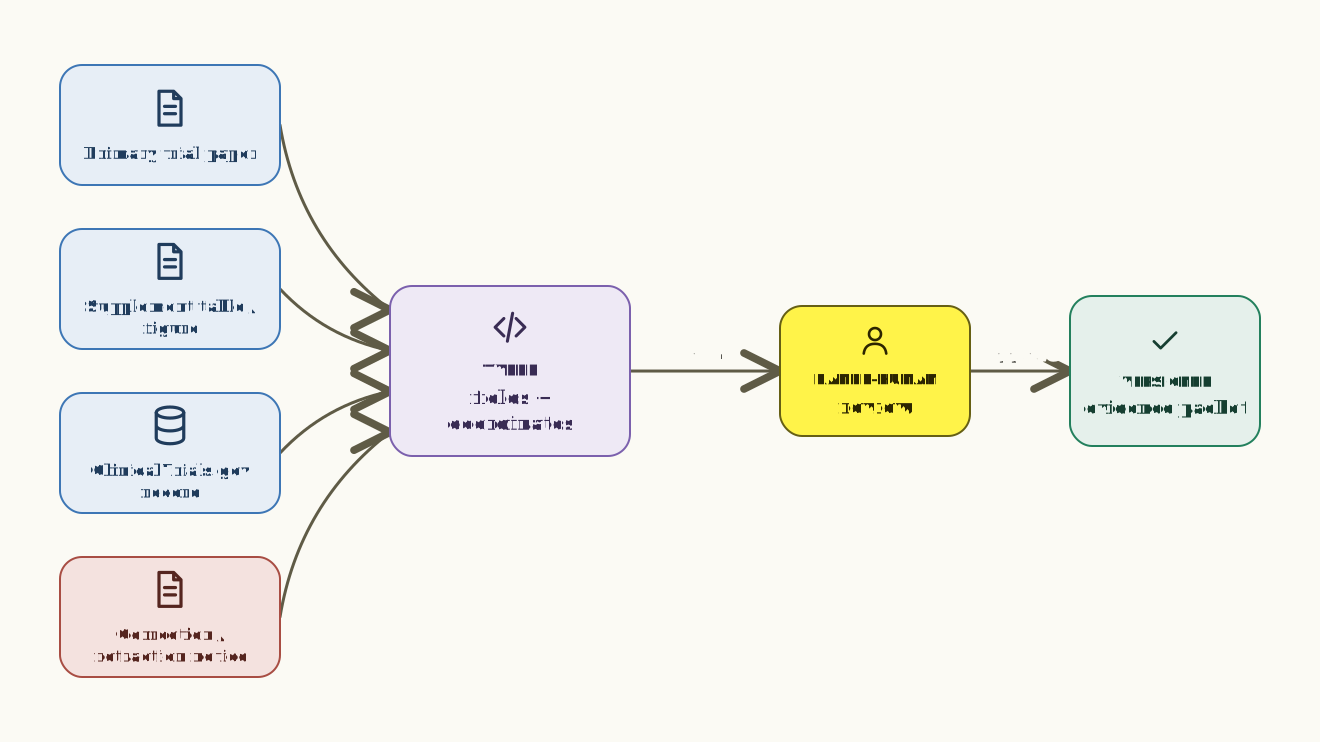
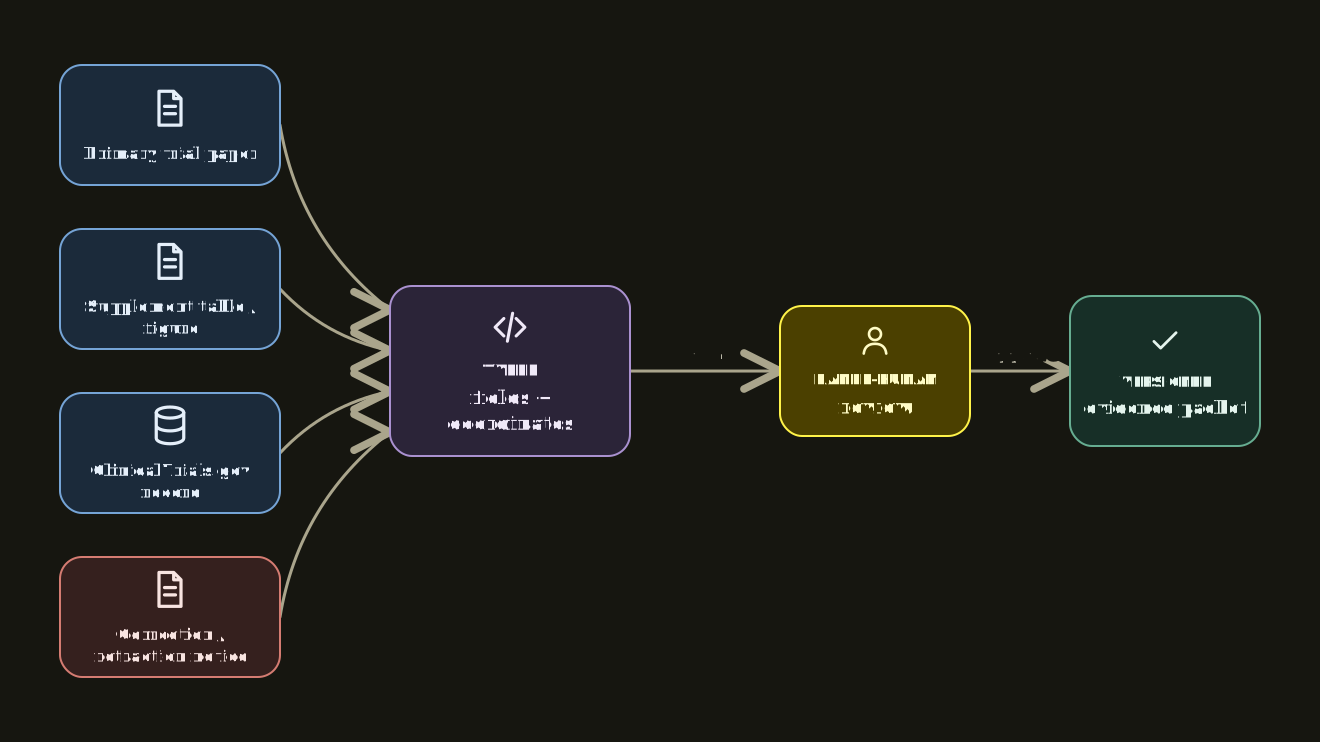
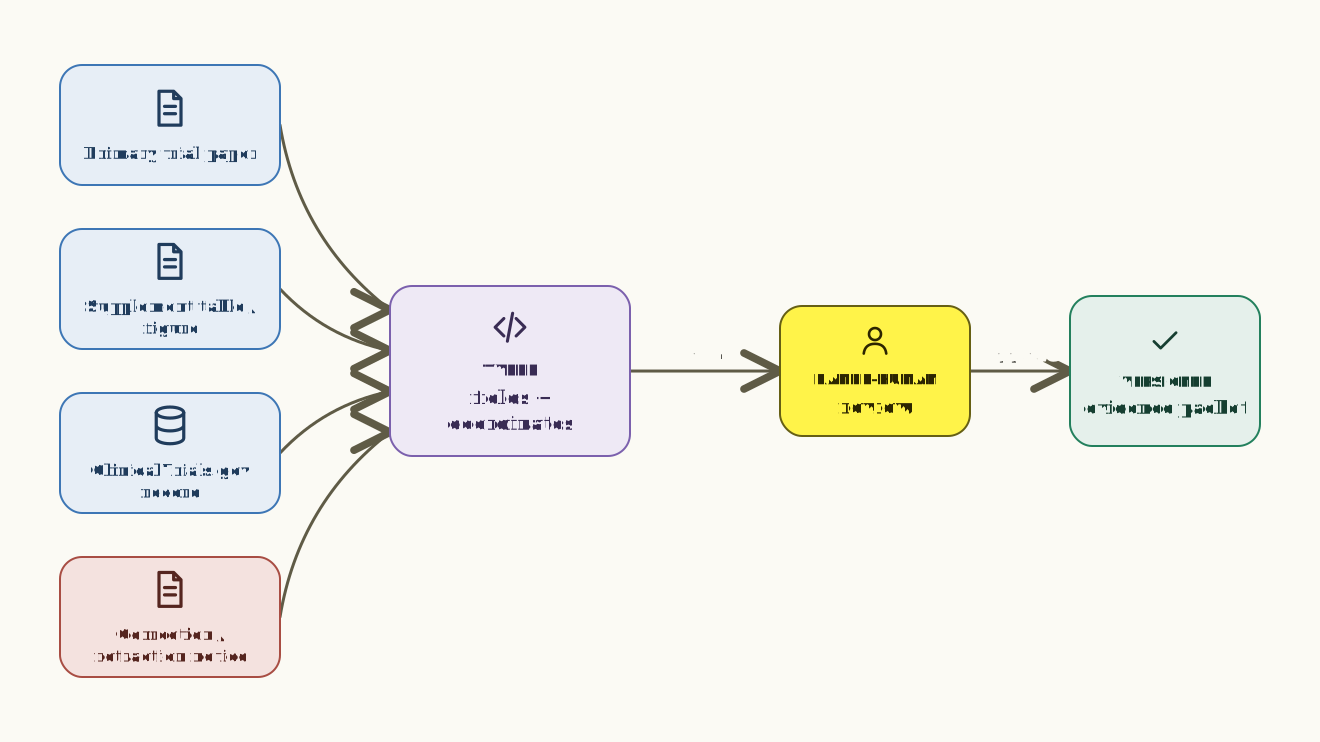
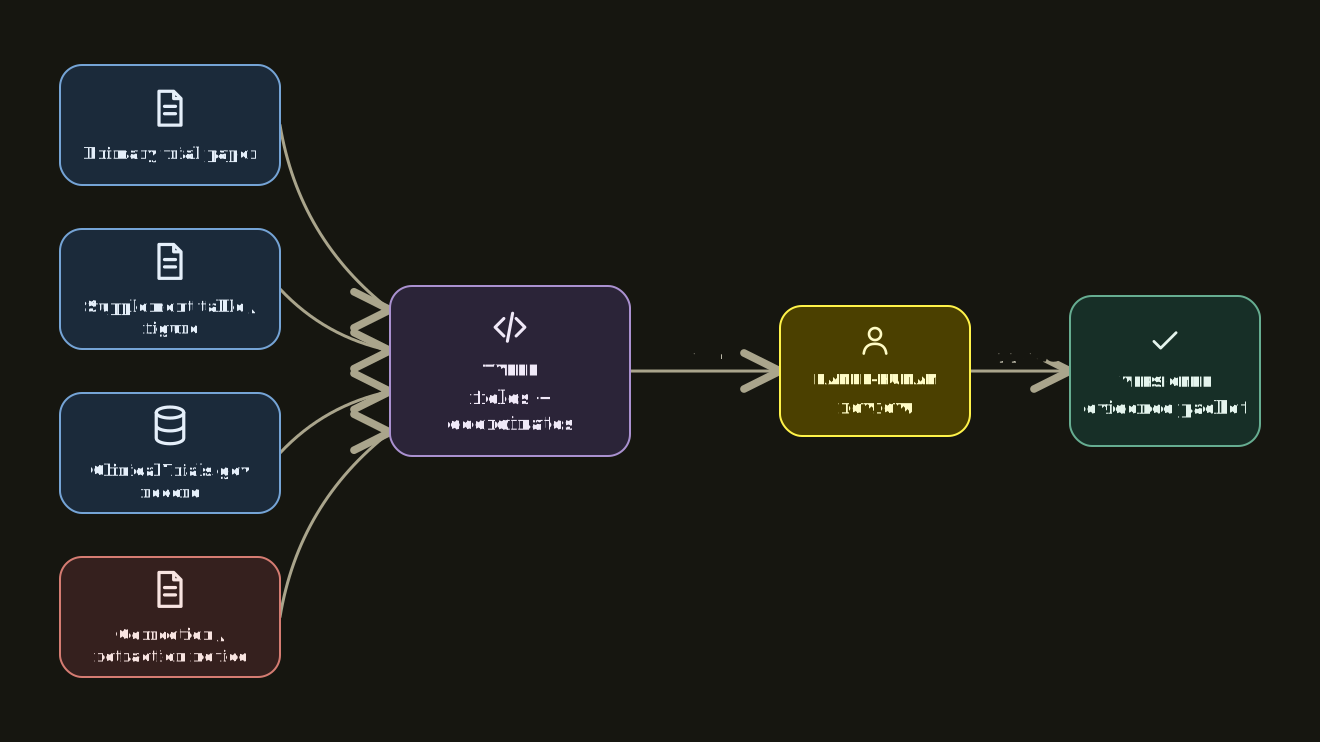
The working grant proposal applies the Sponge approach to multimodal clinical AI. TRACE covers provenance, modality linkage, evidence grading, and a contradiction ledger. AUTHORITY covers actionable uncertainty, escalation, a named-human gate, and a release decision.

Clinical imaging plus molecular and clinical data exposes mistakes that a text-only demonstration can hide: wrong-patient or wrong-region linkage, leakage, overconfident fusion, and a model action mistaken for clinical evidence. The FUTURE-AI consensus guideline and work on generalist medical AI show why traceability, robustness, fairness, and human oversight have to travel with technical capability.

The proposal is for portable playbooks and evaluation methods. It does not claim that Sponge is a clinical decision-support system, that it is deployment-ready, or that a clinical partnership and data path have already been secured.

11 · status

What is real; what remains research

The architecture is operational; semantic research quality and clinical readiness remain explicit frontier work.

  • Real: workspace, ontology kernel, proposal/review split, editions, API, CLI, and skill.
  • Recorded trial: 18 mechanical checks passed; semantic acceptance did not.
  • Frontier: entailment, citation coverage, source independence, clinical formats, privacy, and transfer.
  • Architecture is implemented; research quality is still an empirical claim to earn.

Current system, explicit frontier

Sponge already contains the production document workspace, stable blocks and citations, the seven-concept knowledge kernel, proposal/review transitions, immutable editions, and programmatic interfaces. Those are implemented system properties—not a promise about the quality of every synthesis.

The clearest recorded diagnostic trial passed 18 mechanical gates but failed semantic acceptance: 88.81% factual precision, 82.81% citation coverage, 78.57% entailment, and 25% source quality and independence. These are one internal diagnostic, not a benchmark result. Their value is that the system preserved a legible failure instead of turning partial success into a launch claim.

The next frontier is semantic: stronger entailment and coverage, genuinely independent sources, robust contradiction handling, and evaluations that transfer beyond the builders. Clinical work adds native imaging selectors, privacy and BAA decisions, governance, and usability. Google Research’s chain-of-evidence framing is a useful adjacent standard for what verifiable autonomous research should have to show.

12 · conclusion

The durable object is the path

Knowledge becomes durable when the consequential path to it remains inspectable.

  • Ask what matters.
  • Preserve what changed the answer.
  • Keep disagreement visible.
  • Publish a reproducible edition—and a better next question.

The path is the durable object

Sponge’s long-term ambition is a generative encyclopedia steered by human curiosity and enriched by AI. Its more immediate discipline is simpler: do not discard the path that made an answer worth believing.

That path includes the inquiry, the observed sources, the claims they support or contradict, the context in which they hold, the agent actions that transformed them, the human decisions that created authority, and the exact revision that became public. The result can be read as a page, inspected as a graph, or continued as a new inquiry.

This is why Sponge is best understood as infrastructure for durable knowledge rather than another answer surface. The Sponge overview, Co-STORM, and W3C PROV-O offer three complementary views of that destination: human inquiry, collaborative synthesis, and explicit provenance.