saved
Adapting for a world of software factories
Hraness republishes this public post from a saved copy. The post is the author’s own words.
Trying to build impactful software. Founder @warpdotdev, former Principal eng @Google.
Agentic engineering is really two disciplines now:
- Product engineering: ensuring the quality and usefulness of product
- Factory engineering: deploying agents to build that product, optimizing system efficiency and output quality
Here's how to adapt:
Adapting for a world of software factories
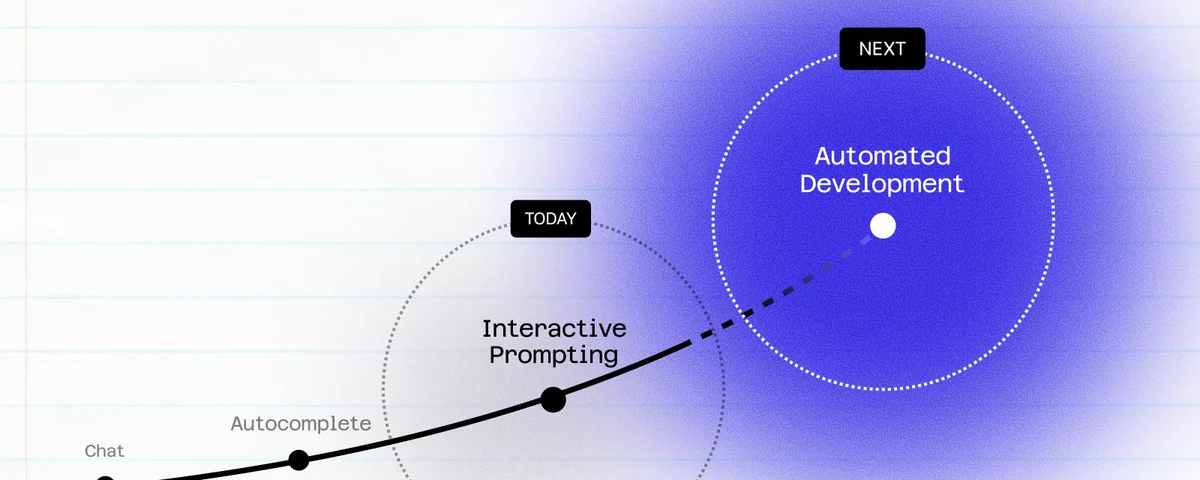
Software engineers have been through a lot of change in the past two years, transitioning from writing code by hand to steering agents via local interactive prompting, the current paradigm. Engineers were skeptical of prompt-driven development at first, but it’s standard now, and by and large folks seem well adjusted to working with agents this way.
The next paradigm is software factories, where agents do more and more autonomous work across the entire software lifecycle. From my conversations with customers and observations of Warp’s own team, making this shift is potentially more challenging than the last one. But the gains in productivity, cost management and control are profound with a factory approach, so I believe the shift is inevitable.
There isn’t a universally agreed upon definition of what “software factory” means, and some folks imagine “dark” factories operating with no human oversight at all. If you don’t need humans, engineers rightly ask what their job is. You end up with a demotivated team that thinks they are no longer needed. Business leaders may want dark factories, but that’s not realistic right now, and pursuing them can cause engineering attrition.
In a factory, all work is public by default, including work that used to be private, in a developer’s “inner loop.” This is very different from what engineers are used to, where they work locally on changes and the first the team sees of them is when those changes are pushed for review as a PR. Working in public exposes how you work, not just what you build, to the entire team, and that can be uncomfortable. This is compounded because work is measured, with it being easy to see how efficient each engineer is from a token use perspective. It can make us all feel like cogs in a machine.
Also, the metaphor of “factory” is kind of a bummer. It feels like your job as an engineer is either working on an assembly line, or building the assembly line that obviates the need for your talents. If you use the “AI teammate” metaphor (which I also dislike), then it feels like engineers are becoming managers of sycophantic and somewhat inept junior engineers. For folks who take pride in the craft of building, this all feels like commoditization of software creation.
A day in the life of a factory engineer
At Warp, our entire focus is on building the technical infrastructure, Warp Factories, to enable teams to make the transition to this new way of working, but we are also thinking hard about how it empowers engineers working with factories. I’ve written a guide for interested teams on the crawl, walk, run steps for adopting factory infrastructure.
At Warp we make clear to our engineering team that they now have two main jobs: building the product and building the factory that builds the product.
Our engineering team still is responsible for the quality and usefulness of the product – this cannot be delegated to agents. They will continue prompting and steering agents to make sure the right thing gets built and that it works well for users.
This is “product engineering,” and humans will continue to do it. Humans are uniquely positioned to know what to build, how the pieces should fit together, what the product experience ought to be, what constitutes good design. Humans have taste, and humans for the time being have more context than agents, making it more likely they build useful stuff.
There are two caveats here though. First, there will be some types of product work that don’t need any human input at all and can be purely automated. Think of fixing server crashes, simple bugs, small UX papercuts, dependency upgrades, etc. This percent starts low (for Warp, it started around 20-30%), but goes up over time. In fact, driving it up is part of the second job of the engineer, which I’ll get to momentarily.
The second caveat is that product engineering will work differently than in the past. Rather than engineers working locally with their own bespoke setups, they will primarily be doing this work “through the software factory,” which means prompting agents that live in the cloud through knowledge work tools like Slack and Jira, in public. They will hand off as much of the software lifecycle as possible to the factory. All of this work will be inherently visible and measurable, and that’s a feature, not a bug. The whole team should be trying to work more publicly and with more of a bias towards automation.
At Warp we measure “human touches per PR,” and over time, this number should go down. For example, say an engineer is building a relatively complex feature into an app, like adding searching, sorting and filtering to a database driven view (just pulling a random task we did recently at Warp). A human will do an initial prompt (first touch), provide context like mocks, and iterate with a factory agent on a spec (n touches, while you iterate). Then the factory takes over for a bit, doing implementation, adversarial code review, and producing computer use videos showing the behavior. Then a human looks again, and may or may not need to do a manual code review (another touch). Over time there will be fewer touches as the factory improves.
In addition to automation metrics, developers should expect to also measure and iterate on other aspects of how they use the factory, including how much their agents ship, and at what cost. Again, engineers could view this as a drag, but they also can view it as a game, and winning that game means shipping more for less, using an engineering mindset to improve.
This brings me to the second job of the engineer, which is, somewhat ironically, to engineer the factory so they are doing less of the first job. I call this factory engineering. It consists of measuring the performance of your factory using DORA metrics and LLM-as-a-judge scorers, identifying areas for potential improvement to skills, context and model mix, and implementing changes that increase automation and velocity. This needs to be done with an engineering mindset – you don’t adjust your factory on vibes; you measure, test, benchmark and then improve. Some of this improvement itself can be automated via self-improvement, but much of it needs human insight.
At Warp we make it explicit that the expectation of engineers is not just to build products, but to improve factories. We bake this into feedback and performance reviews, celebrate changes that make code production more efficient or higher quality, and ask senior engineers to model the behavior. We envision both jobs as being the responsibility of all engineers, to make it clear that factory engineering is now part of software engineering.
We emphasize that this work is engineering, albeit of a new kind, and can be really fun. On our team, the folks who like it most are senior engineers who love hard systems problems, who enjoy optimizing and debugging performance issues. It requires a lot of thought, testing and patience. We lean into it as a new skill to learn. And ultimately it lets us ship better products more quickly, which has always been our mission.
Closing thoughts
We’ve been through a lot of change as engineers in the past two years, and that change is going to continue as software factories roll out. Engineers are now responsible for both product engineering and factory engineering. Factory engineering is real engineering and a skill to develop.
Warp’s mission is to provide the world’s best engineering teams with the tools to build, measure and optimize their own workflows using any underlying model and harness on open infrastructure. These capabilities will help teams ship better software more quickly and efficiently.
Warp Factories is currently in early access. Qualified companies get $10k of factory usage.
Cover image. A rising curve on notebook paper runs from Chat to Autocomplete to Interactive Prompting, marked TODAY, then a dashed line into a purple field labeled Automated Development, marked NEXT.